News & Updates
Stay updated with the latest from Nonda Coffee
Latest News
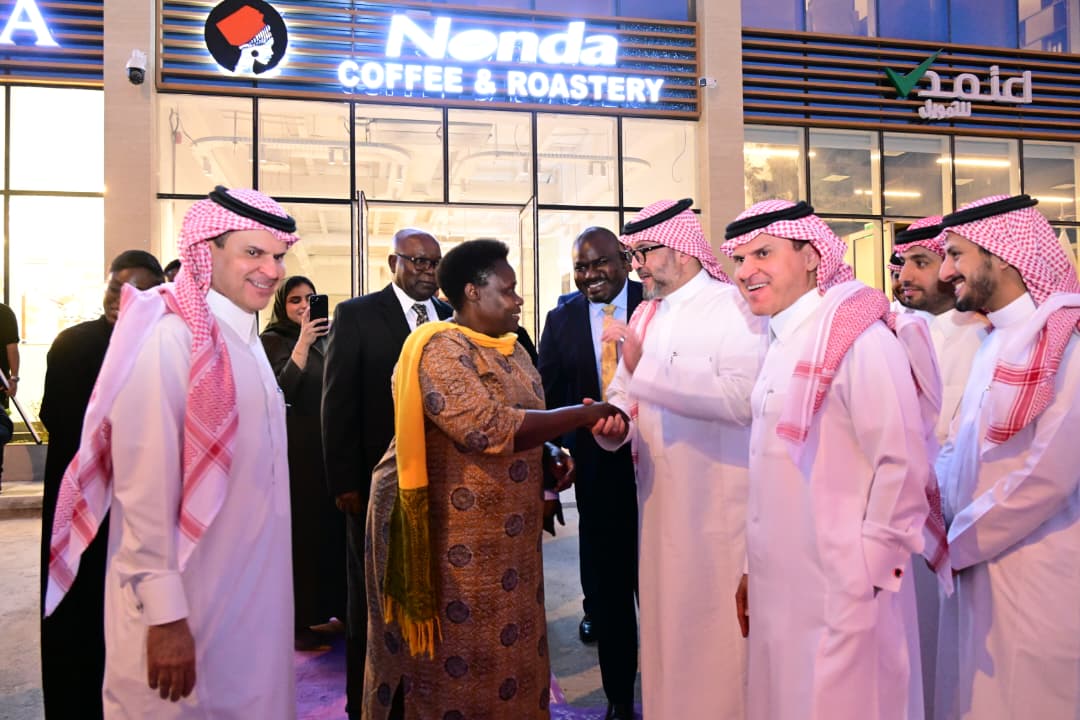
Nonda Coffee Launches Uganda's First Single-Origin Coffee Café in Riyadh
Nonda Coffee, a brand of Nonda Commodities Limited (Uganda), today launched Uganda's first Single-Origin Coffee Café in Riyadh, marking a historic step in positioning Uganda's coffee on the global premium stage.
Read Full Story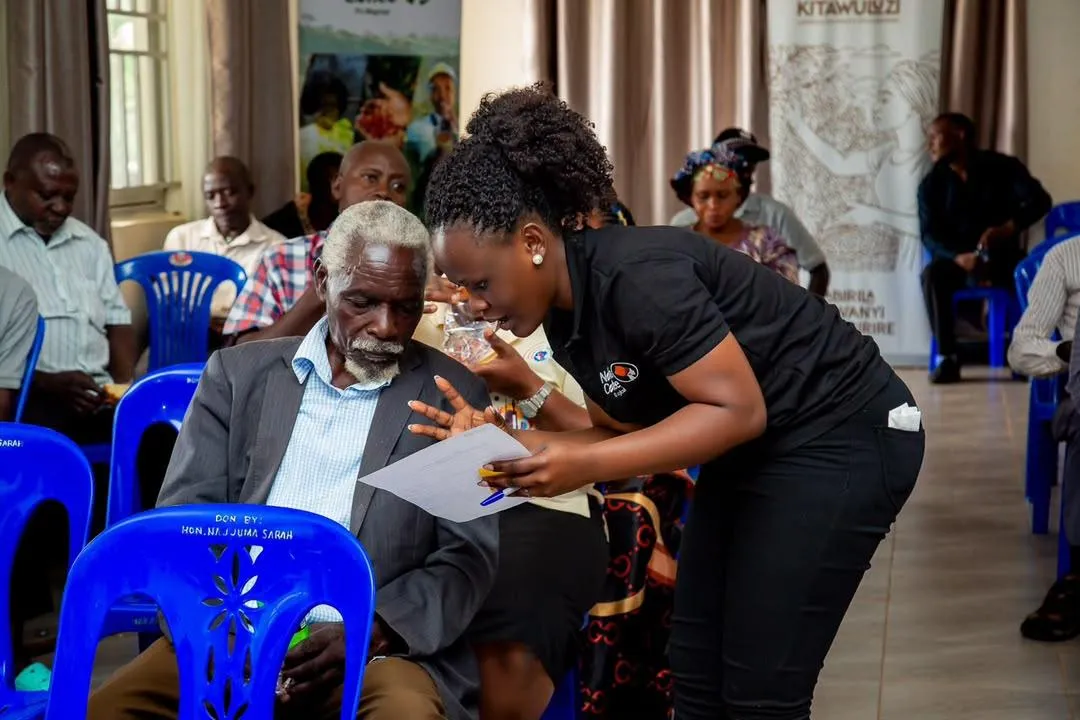
Nonda Kitawuluzi Engages Nakaseke Coffee Farmers on Value Chain Opportunities
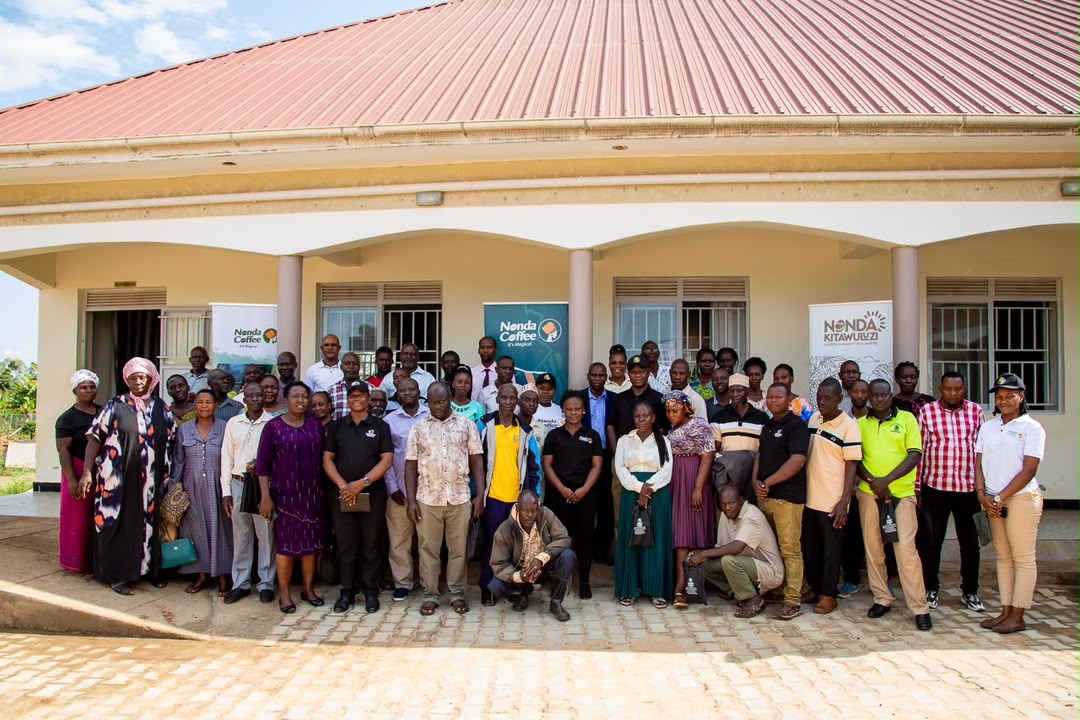
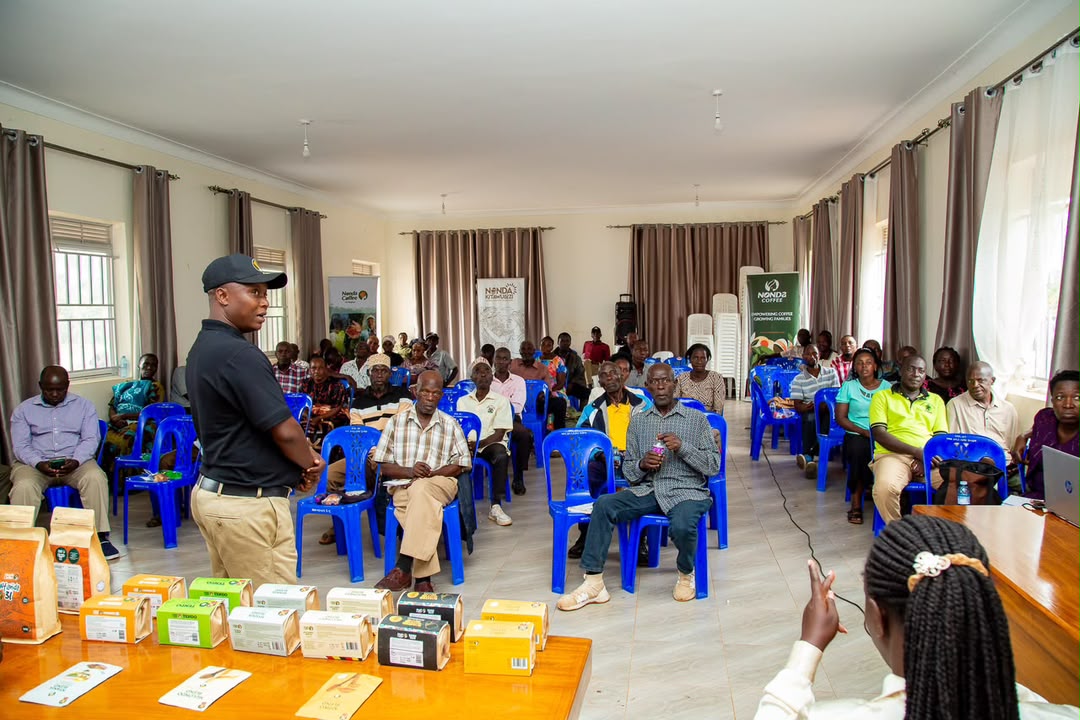
On July 29, 2026, the Nonda Kitawuluzi team visited Nakaseke Sub-county for a community engagement session that brought together coffee farmers from across Nakaseke District. The gathering was part of Nonda Commodities' ongoing farmer mobilization efforts, a critical step in preparing farming communities for the opportunities the Nonda Coffee Value Park will unlock when it breaks ground in October 2026.
The session focused on one clear message: Uganda's coffee value chain is transforming, and farmers who prepare now will lead that transformation.
Quick Summary
Nonda Kitawuluzi's Nakaseke engagement connected farmers with practical opportunities across the coffee value chain: quality production, value addition, and direct market access.
The engagement forms part of a broader mobilization covering 13 districts, 183 Kitawuluzi Centres, and 939 Bubondo farmer clusters reaching over 200,000 coffee households.
Farmers shared their challenges and expectations, then reaffirmed their commitment to partnering with Nonda Commodities to improve production and transform livelihoods.
Community Engagement in Action: What Happened in Nakaseke
The Nonda Kitawuluzi team met farmers at the sub-county level in Nakaseke, one of the 13 districts in the Nonda Value-at-Source Coffee Project's catchment area. Unlike top-down agricultural programs, Kitawuluzi engagements start with listening.
Farmers described their daily realities: inconsistent input access, price volatility at farmgate, limited knowledge of international quality standards, and the gap between what they produce and what global buyers demand. The team responded with specifics, not promises.
"Farmers told us exactly what stands between them and better incomes. We told them exactly how the Value Park changes that equation," said a Nonda Kitawuluzi field officer who led the session.
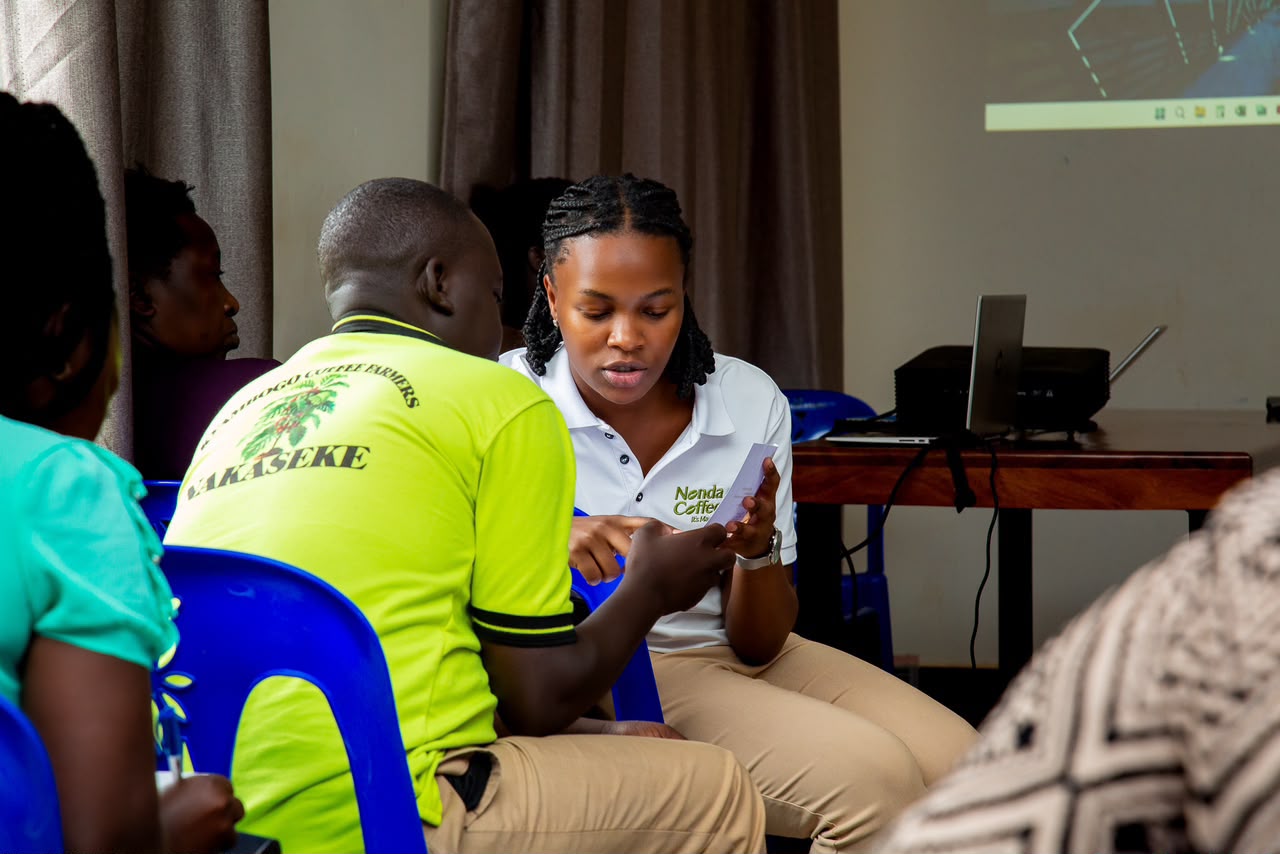
The format was practical: small-group discussions on quality grading, a walkthrough of the supply chain from parish to export, and a Q&A session where farmers asked blunt questions about pricing, timing, and what the Value Park actually means for someone farming two acres in Nakaseke.
Coffee Value Chain Opportunities: Quality, Value Addition, and Market Access
Every Kitawuluzi engagement anchors on three pillars that turn subsistence farming into commercial agriculture.
Quality production starts at the farm. The team demonstrated how simple practices (selective harvesting of ripe cherries, proper drying on raised beds, clean storage) can move a farmer's coffee from ordinary grade to premium, commanding prices up to 40% higher at the Kitawuluzi buying centre. In a district like Nakaseke, where Robusta dominates, hitting Screen 18 specifications opens access to export-grade pricing that most farmers have never received.
Value addition is where the Nonda Coffee Value Park transforms the economics. Currently, over 90% of Uganda's coffee is exported as raw green beans (UCDA, 2025). The farmer receives a fraction of the final consumer price. The Nonda Coffee Value Park, sitting on 100 acres in Butalangu Town Council, will process 42,000 metric tonnes of green coffee and produce 7,200 metric tonnes of instant coffee annually. When processing happens at source, the value stays in Uganda, and the farmer's share grows.
Market access is the third pillar. Nonda Commodities has built a supply chain that moves coffee from parish-level Bubondo Clusters (groups of 10 to 15 farmers) through 183 Kitawuluzi Centres for aggregation and grading, then to advanced quality control at E'byaggi Centres, and finally to the Nonda Coffee Value Park for processing and export to over 60 countries. Every farmer in a Bubondo Cluster has a direct line to global markets: no middlemen, no price opacity, no waiting months for payment.
Explore the full Value-at-Source supply chain
The Nonda Coffee Value Park: What It Means for Nakaseke Farmers
The Nonda Coffee Value Park in Butalangu Town Council sits within Nakaseke District. For the farmers who attended the July 29 session, the facility is not an abstract future project: it is a physical processing plant being built in their district, expected to create 4,085 direct jobs and open consistent, premium-price demand for their coffee.
The park will produce premium roasted and specialty coffee, coffee capsules, ground coffee, ready-to-drink beverages, and instant soluble coffee. Each product line requires consistent, high-quality raw material. Each product line pays more than the commodity export price.
See the full scope of the Nonda Coffee Value Park
Nonda's five promises to farmers shaped every conversation in Nakaseke: fair prices, quality support, reliable markets, business skills, and continuous extension services. The team made clear that these are not charitable commitments. They are the commercial foundation of a supply chain that depends on farmer success.
"When farmers prosper, Uganda prospers" is not a slogan in the Kitawuluzi model. It is the operating logic.
Farmers Speak: Challenges, Expectations, and Commitment
The most significant portion of the Nakaseke session belonged to the farmers. Their testimonies revealed both the scale of the challenge and the depth of willingness to change.
Farmers cited inconsistent weather patterns affecting flowering cycles, the high cost of certified seedlings, limited access to affordable credit for inputs, and years of being price-takers in a market where middlemen captured the margin. Several older farmers noted they had attended similar meetings over decades, from government programs and NGO interventions, that produced pamphlets but no lasting change.

What distinguished this session, several farmers said, was the specificity. The Kitawuluzi team did not talk about "empowerment" in the abstract. They described a physical buying centre, a known price formula tied to UCDA benchmarks plus a quality premium, and a timeline that ends with a processing plant breaking ground in their district within months.
By the end of the session, farmers reaffirmed their commitment to improving coffee production and partnering with Nonda Commodities. The conversion from scepticism to commitment did not happen because of a speech. It happened because the numbers added up and the timeline was real.
The Bigger Picture: Kitawuluzi's Ongoing Farmer Mobilisation
The Nakaseke engagement is one node in a network that now spans 13 districts, 183 Kitawuluzi Centres, and 939 Bubondo Clusters. Nonda Commodities has directly engaged 46,000 farmers and counting, with over 200,000 coffee households in the catchment area.
The mobilisation follows the supply chain mantra: ORGANIZE, TRAIN, PRODUCE, AGGREGATE, PROCESS, MARKET. Nakaseke is in the organise-and-train phase. Farmers are being registered, GPS-mapped, and grouped into Bubondo Clusters. Each cluster gets a lead farmer, a training schedule, and a direct connection to the nearest Kitawuluzi Centre.
When the Nonda Coffee Value Park breaks ground in October 2026, the farmers who attended sessions like the one in Nakaseke will not be watching from the sidelines. They will be the supply base: trained, organised, traceable, and ready to deliver at export quality.
Partner with Nonda as a coffee buyer
The Value-at-Source model, endorsed by President Yoweri Kaguta Museveni in July 2026, is designed to be replicated across Uganda's coffee-growing regions. Nakaseke is an early mover. The farmers who raised their hands on July 29 understood that being first in line has advantages.
Frequently Asked Questions
What is the Nonda Kitawuluzi Initiative?
The Nonda Kitawuluzi Initiative is Nonda Commodities' farmer mobilisation and empowerment program. It organizes coffee farmers into Bubondo Clusters (10 to 15 farmers each), connects them to Kitawuluzi Centres for aggregation and quality grading, and provides training, fair pricing, and direct market access through the Nonda Value-at-Source supply chain.
When will the Nonda Coffee Value Park start operating?
The Nonda Coffee Value Park is scheduled to break ground in October 2026 in Butalangu Town Council, Nakaseke District. Construction will proceed in phases, with full commissioning to follow. Once operational, the 100-acre facility will process 42,000 metric tonnes of green coffee and produce 7,200 metric tonnes of instant coffee annually.
How can coffee farmers in Nakaseke join the Nonda Kitawuluzi program?
Farmers in Nakaseke and the 12 other catchment districts can join by contacting their nearest Kitawuluzi Centre or attending community engagement sessions like the one held on July 29, 2026. Registration includes GPS farm mapping, grouping into a Bubondo Cluster, and enrollment in the training and quality support program.
What makes Nonda's farmer model different from other coffee programs?
Three things: price transparency (formula tied to UCDA benchmarks plus quality premiums), physical infrastructure (183 buying centres plus a processing park, not just training workshops), and direct market access (coffee moves from parish to export without layers of intermediaries). The model treats farmers as commercial partners, not aid recipients.